Dance Competition Packing List: The Checklist I Use
Dance competition packing involves a surprising number of very small, very important things. The costume is easy to remember. The hairpiece that goes with that costume? That’s where things get interesting.
Whether you’re heading to your first competition or preparing for a weekend with multiple routines, this dance competition packing list helps you organize costumes, shoes, hair supplies, food and all the little extras.
Start with your studio’s instructions, then work through the sections below. You don’t need to buy everything on the list. You need a system that makes the right things easy to find.
As an Amazon Associate, I earn from qualifying purchases. If you purchase through qualifying links, I may earn a commission at no extra cost to you.
Quick Dance Competition Packing Checklist
Short on time? Start here:
- Every costume, including all separate pieces
- Matching accessories and hairpieces
- Correct shoes for every routine
- Required tights, plus a spare pair
- Studio-approved undergarments
- Hair supplies and required makeup
- Small costume repair kit
- Water bottle, snacks and food for longer breaks
- Warm-up clothes and an easy-change outfit
- Schedule, studio arrival instructions and charged phone
Before you pack: Check the venue’s rules for garment racks, changing areas, outside food and electrical appliances. Follow your studio’s arrival time and hair and makeup requirements.
Free Printable: Dance Competition Checklist
Want it on paper? Grab the free two-page dance competition checklist. Page one covers costumes, shoes, hair and makeup, the emergency kit, food and parent essentials. Page two gives every routine its own check.
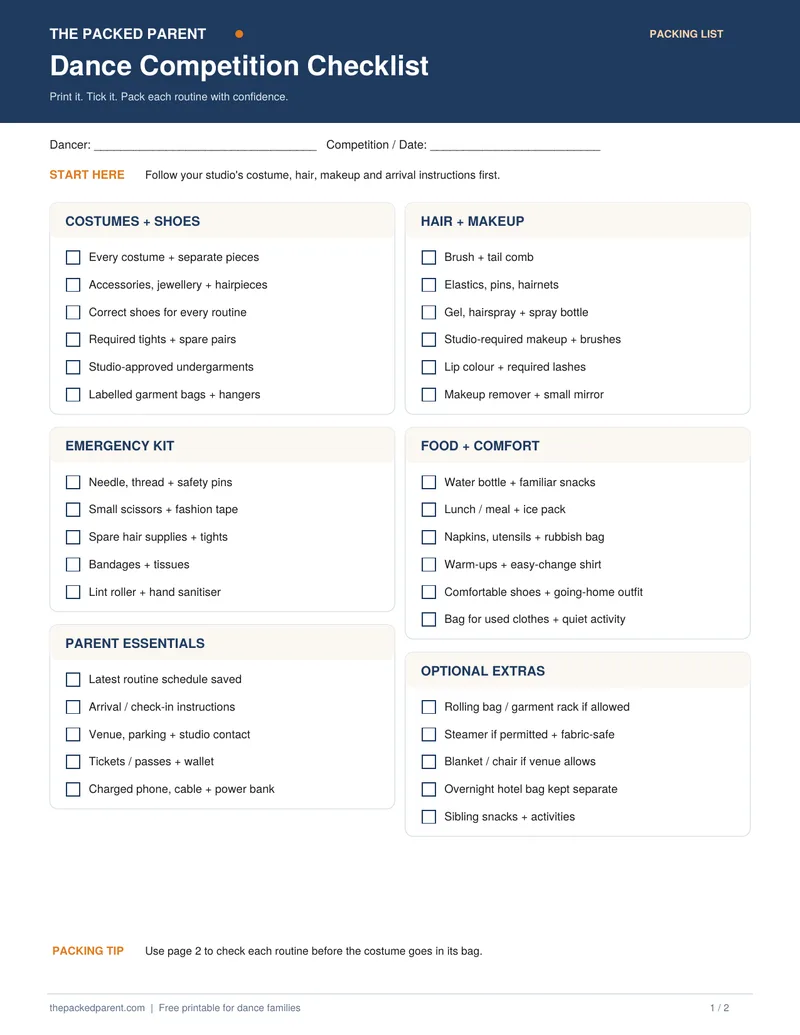
Download the Dance Competition Checklist (PDF)
1. Pack Costumes by Routine
A costume is more than the main outfit. Depending on the routine, it might also include gloves, a belt, a separate skirt, a headpiece or a particular pair of earrings.
Keep each routine’s pieces together so you can check the whole outfit at once.
Costume checklist
- Main costume
- Separate costume pieces
- Hairpiece or headwear
- Required accessories
- Correct tights
- Required undergarments
- Correct shoes
- Hanger and labelled garment bag
Label the garment bag with the dancer’s name and routine name. Add the routine number once the final schedule is available.
Small accessories can go in a labelled zip pouch attached to the hanger or tucked into the garment bag’s pocket. Keep anything that could snag tights or delicate fabric separate.
Helpful gear: Univivi clear dance garment bags are one option to consider. Check the bag length against your longest costume and allow enough room for fuller skirts.
Packing tip: Lay out one complete routine at a time. Check the costume, accessories, tights and shoes together before moving to the next one.
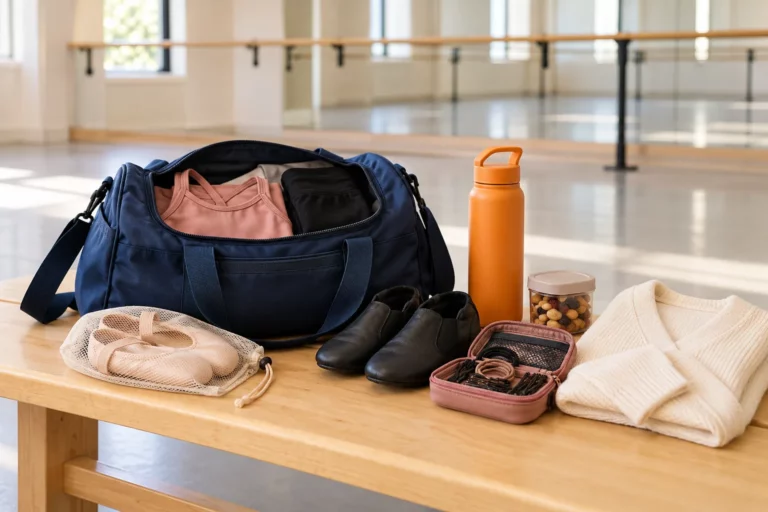
2. Give Shoes and Spare Tights Their Own Check
Having “dance shoes” packed doesn’t necessarily mean the right pair made it into the bag.
Check each routine against the studio’s requirements, including shoe colour and style. Look over straps, buckles and laces while you still have time to deal with a problem.
Shoes and tights checklist
- Required shoes for every routine
- Spare tights in the correct colour and style
- Required socks
- Footwear for walking around the venue
- Separate shoe bags or washable pouches
Keep shoes away from clean costumes. Label them in a discreet place that won’t show onstage.
If your dancer wears different tights for different routines, label those packages too. “The pink ones” becomes less helpful when there are three slightly different pinks.
3. Choose a Bag System That Fits Your Weekend
For a dancer with one or two costumes, a regular suitcase and garment bags may be plenty.
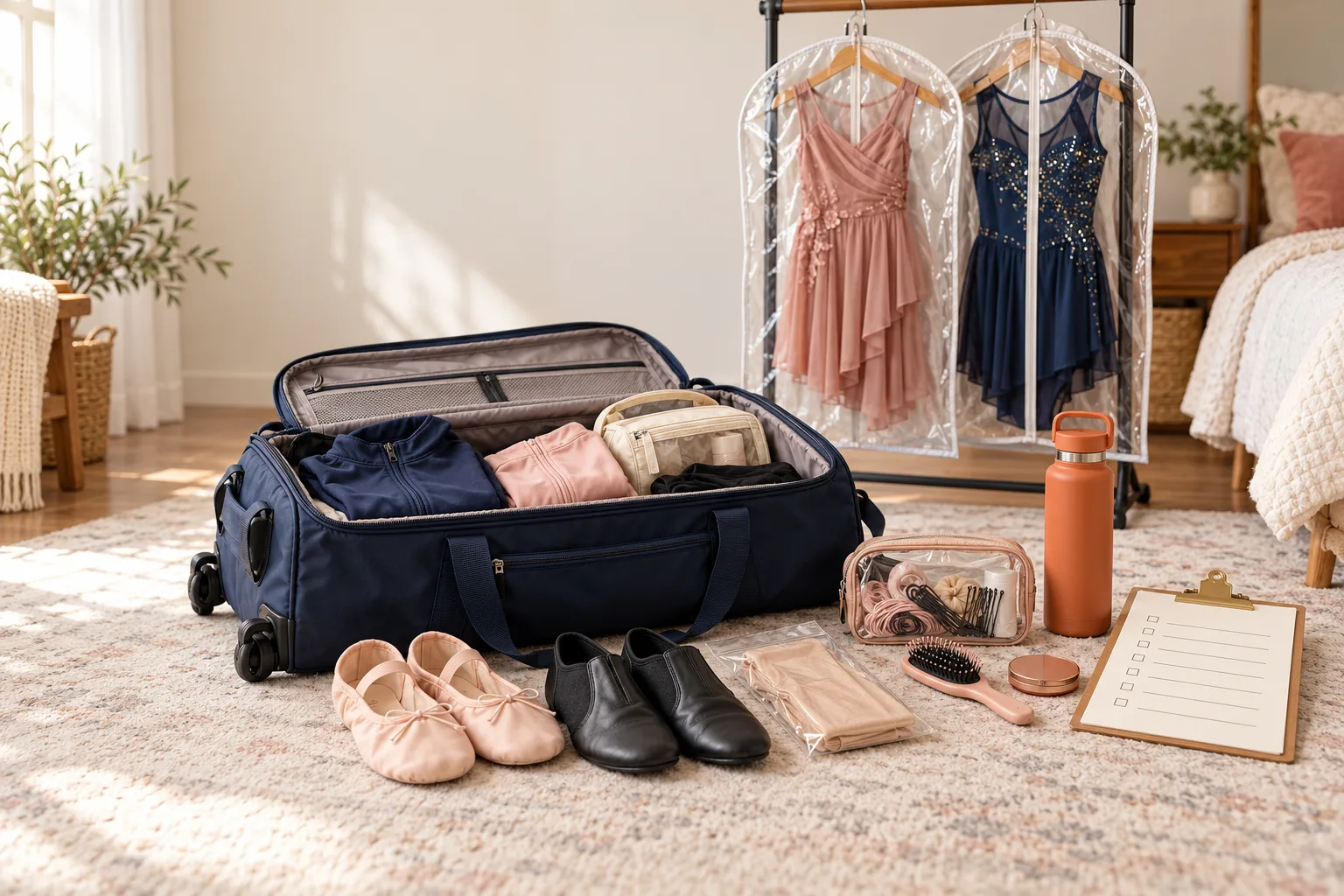
With several routines and costume changes, a rolling dance bag with a garment rack may be worth considering. It gives costumes somewhere to hang when the venue allows it.
Before buying, check:
- Whether the rack is included
- The rack’s stated load limit
- Bag weight before packing
- Space for shoes and bulkier costumes
- Whether it fits in your vehicle
- How you’ll manage stairs or uneven parking lots
Amazon option to compare: Fanwoli 23-inch rolling dance bag with garment rack.
Treat the measurements as a starting point. Compare them with what your dancer actually needs to bring.
Budget-friendly approach: Use the luggage you already own for your first competition. A bigger bag can wait until you know what would make your weekends easier.
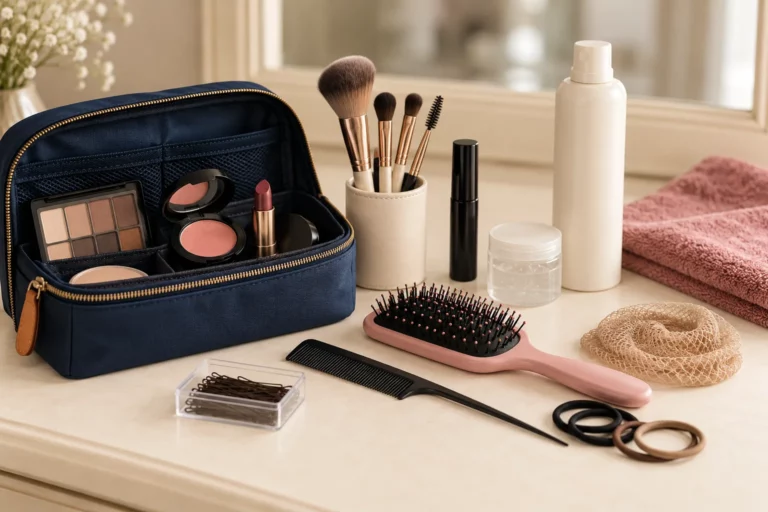
4. Keep Hair and Makeup Supplies Together
Follow the studio’s instructions before buying makeup, hairpieces or bun supplies. Requirements can vary between studios and routines.
Pack the required look, then add enough backup supplies to handle a redo.
Hair checklist
- Brush and tail comb
- Hair elastics
- Bobby pins and hairpins
- Hairnets in the required colour
- Required bun supplies
- Gel and hairspray
- Spray bottle, if used
- Required hairpieces
- Small mirror
Makeup checklist
- Studio-required makeup
- Clean brushes and applicators
- Required lip colour for touch-ups
- Lashes and adhesive, only if required
- Makeup remover
- Cotton pads or reusable cleansing pads
- Tissues and a small towel
Keep liquids contained and makeup separate from costumes. Try any unfamiliar products before competition day.
Helpful gear: A BAGSMART wide-opening makeup bag is an option for keeping supplies together. Check its dimensions against your palettes, brushes and bottles.
A button-front or zip-front top is also useful: it can come off without pulling over finished hair and makeup.
5. Add a Small Dance Competition Emergency Kit
The emergency kit doesn’t need its own suitcase. A small pouch with a few useful supplies is easier to carry and find.
Emergency kit checklist
- Safety pins in a few sizes
- Needle and thread suited to the costumes
- Small scissors
- Extra hair elastics and pins
- Spare tights
- Costume-approved fashion tape, if used
- Lint roller
- Bandages
- Hand sanitiser
- Tissues
Helpful gear: A SINGER travel sewing kit is one starting option. Check the contents and add thread colours that match your dancer’s costumes.
Ask your teacher before making a visible costume repair or changing how a costume fits. Keep pins and needles secured when they aren’t in use.
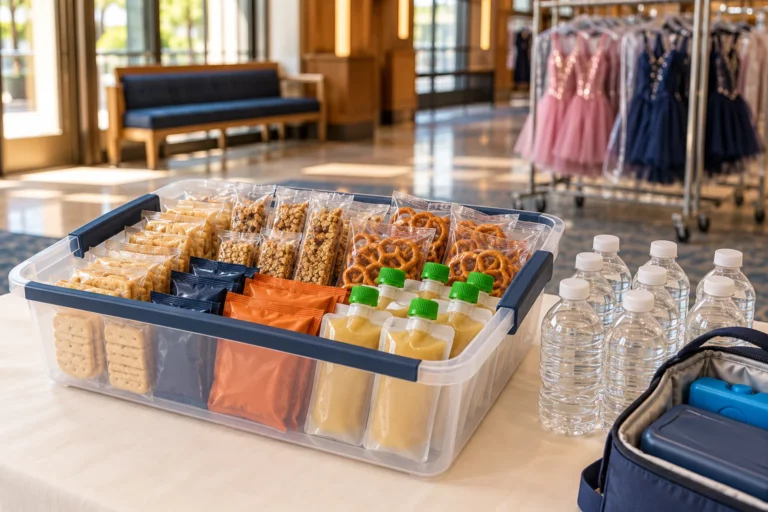
6. Pack Food for the Actual Schedule
Pack for the whole day, including travel and gaps between routines.
Choose familiar foods your dancer will eat, with quick snacks for short breaks and something more substantial when there’s time.
Food and drink checklist
- Refillable water bottle
- Familiar snacks
- Meal for a longer break
- Insulated lunch bag and ice packs for perishables
- Napkins and utensils
- Small rubbish bag
Easy options include sandwiches, wraps, crackers, fruit, oat bars and other foods your dancer already likes.
Check venue food rules and any studio allergy guidance. Keep food away from costumes, and use a cover-up while eating if your dancer is already dressed.
Packing tip: Put the next snack somewhere accessible. You shouldn’t have to unpack three costumes to find a granola bar.
7. Bring Comfortable Clothes for Waiting and Going Home
There can be a lot of waiting between getting ready, performing and awards.
Comfort checklist
- Studio jacket or approved warm-up layer
- Easy-change top
- Comfortable bottoms
- Spare underwear and socks
- Going-home outfit
- Comfortable footwear
- Quiet activity for longer breaks
- Separate bag for used clothing
If the competition involves a hotel stay, pack overnight belongings separately. That lets your competition bag stay organized instead of becoming the place everyone searches for pyjamas.
For siblings coming along, a separate small activity and snack bag can help too.
8. Keep the Schedule and Parent Essentials Accessible
The packing system works better when the schedule is easy to find.
Parent checklist
- Saved competition schedule
- Studio arrival and check-in instructions
- Venue address and parking details
- Required tickets or passes
- Teacher or studio contact information
- Charged phone
- Charging cable and power bank
- Wallet and payment method
- Water and food for yourself
Save screenshots of essential information so you can access it without relying on venue Wi-Fi.
Make a simple routine list with the routine name, number, costume, shoes and hair requirements. Keep the studio’s required arrival time clearly marked.
Do You Need a Steamer?
A steamer is an optional extra, especially for travel weekends. It isn’t necessary for every costume.
If your studio recommends bringing one, a Conair Turbo ExtremeSteam handheld steamer is an option to consider.
Check costume care instructions and ask your studio before steaming delicate fabrics, glued decorations or embellishments. Use it only where permitted, away from children and never while a costume is being worn.
The Night-Before Packing Routine
Give yourself time for one calm check before bed.
- Check the latest schedule. Confirm the studio’s arrival instructions and look for updates.
- Check each routine as a complete outfit. Costume, accessories, tights and shoes.
- Check the hair and makeup kit. Replace anything empty or missing.
- Pack food and set out refrigerated items. Leave a reminder on the bag for anything staying in the fridge overnight.
- Charge devices and the power bank.
- Put the first outfit and essential paperwork within reach.
- Load what you can safely leave in the vehicle. Keep temperature-sensitive products indoors.
Before leaving, do one final check for costumes, shoes, hairpieces and food.
More Dance Parent Guides
- Dance Competition Emergency Kit: What Every Dance Mom Needs
- How to Organize Dance Costumes for Competition Weekend
- First Dance Competition? What Parents Need to Know
Find every dance guide in one place on our Dance Parent Hub.
Dance Competition Packing FAQs
What should I bring to my child’s first dance competition?
Start with your studio’s list. Pack complete costumes, required shoes and tights, hair and makeup supplies, food, water, comfortable clothes and the schedule. Add a small emergency kit and use bags you already own where possible.
Does every dancer need a rolling bag with a garment rack?
No. A suitcase and garment bags may work well for a small number of routines. A rack bag becomes worth considering when costume changes and carrying everything are becoming difficult.
How many spare tights should I pack?
One spare pair for each required colour and style is a useful starting point. Check with your studio if your dancer has several routines or specific requirements.
Should my dancer arrive in costume?
Follow the studio’s instructions. If arriving dressed, use a suitable cover-up and keep food away from the costume. Otherwise, make the first costume easy to access.
What can I leave at home?
Anything your dancer doesn’t need for that event. Start with required items, then add extras that solve a specific problem. You can build your kit over time.
Pack Once, Make the Weekend Easier
A useful dance competition packing list puts every routine’s pieces together and keeps everyday essentials easy to reach.
Start with complete costumes, correct shoes, hair and makeup supplies, food and the schedule. Add a few backups, label the small things and give everything a home.
Save this checklist for your next competition weekend—and check for the hairpiece one more time.