First Dance Competition? What Parents Need to Know
Your child has learned the choreography. You’re learning the difference between arrival time, performance time and whatever time everyone needs to start doing hair.
Welcome to your first dance competition.
The day can feel unfamiliar, but you don’t need to arrive knowing everything. You need your studio’s instructions, the right costume pieces and a clear idea of where your dancer should be.
This beginner guide covers what to expect, what to bring and how to make the day feel more manageable.
As an Amazon Associate, I earn from qualifying purchases. If you purchase through qualifying links, I may earn a commission at no extra cost to you.
Start With These Five Things
Before competition weekend, confirm:
- When your studio wants you there
- Where to meet your teacher or group
- What needs to be finished before arrival
- Who is responsible for your dancer throughout the day
- When your dancer is free to leave
Save those details somewhere accessible. They matter more than having the fanciest bag in the changing room.
Free Printable: First Dance Competition Checklist
Print the five questions to confirm with your studio, plus a night-before checklist, on one page. Tick them off as you go.
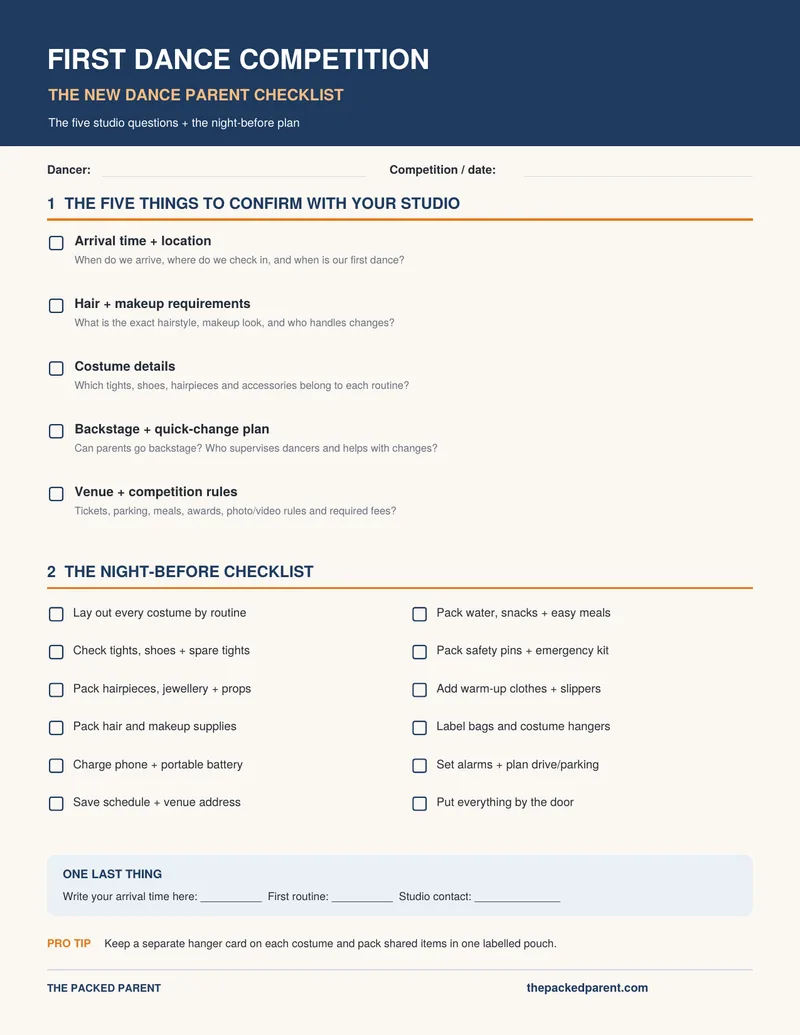
Download the First Dance Competition Checklist (PDF)
How Does a Dance Competition Day Work?
The exact format varies, but your day may include:
| Part of the day | What to expect |
|---|---|
| Arrival | Find the studio’s meeting point and check in as instructed |
| Getting ready | Finish any approved costume, hair or makeup adjustments |
| Preparation | Your teacher directs warm-up, rehearsal or group checks |
| Backstage | Authorized adults and event staff coordinate the dancers |
| Performance | Your dancer performs while you watch from the permitted area |
| Between routines | Costume changes, food, rest and waiting |
| Awards or adjudication | Recognition and feedback follow the event’s format |
| Departure | Leave once your studio confirms your dancer is finished |
Some dancers perform once. Others have several routines spread across the day.
Check your own schedule before making meal, travel or pickup plans.
Arrival Time Is Different From Performance Time
If a routine is listed for 10:30 a.m., that doesn’t mean arriving at 10:20 will work.
Your studio needs time to gather dancers, check costumes and prepare the group. The organizer may also have its own early-arrival requirements.
For example, Starpower’s published 2025–2026 rules specify an early-arrival requirement, with an exception for routines during the first hour. That is one organizer’s rule—not a universal timeline. Follow your event’s current instructions and your studio’s call time.
Ask whether “arrive at 8:00” means:
- Parked and entering the building
- At the studio’s meeting point
- Fully dressed with hair and makeup finished
That one clarification can save a very hurried morning.
Understand the Schedule Before You Go
Highlight your dancer’s routines and the relevant awards sessions.
For each routine, note:
- Routine name and number
- Scheduled performance time
- Studio arrival or meeting time
- Costume and accessories
- Required shoes and tights
- Hairstyle or hairpiece changes
- Awards or adjudication instructions
A routine number can make it easier to follow the program, but don’t use it as your only timing guide. Watch for studio updates and follow the event’s instructions.
Save a screenshot of the essential details so you can access them without relying on venue Wi-Fi.
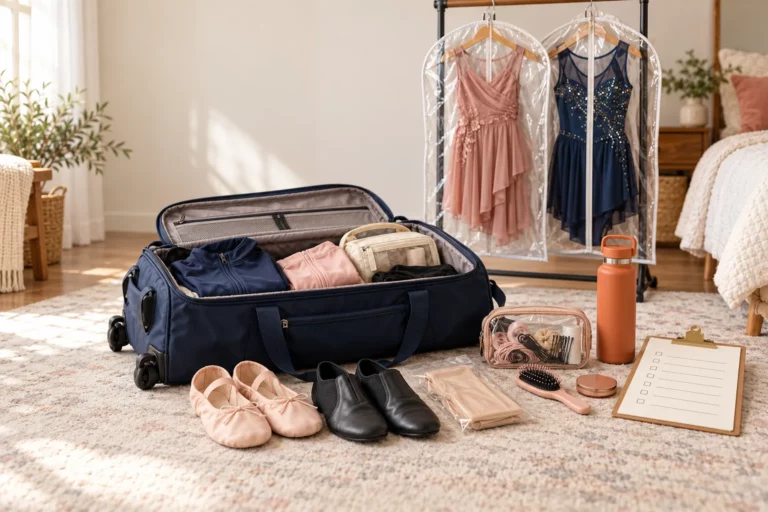
Bring These 12 Things to Your First Dance Competition
1. A complete costume for every routine
Pack all separate pieces, including belts, gloves, skirts and other accessories.
Check one complete outfit at a time rather than packing all costumes first and hoping the extras follow.
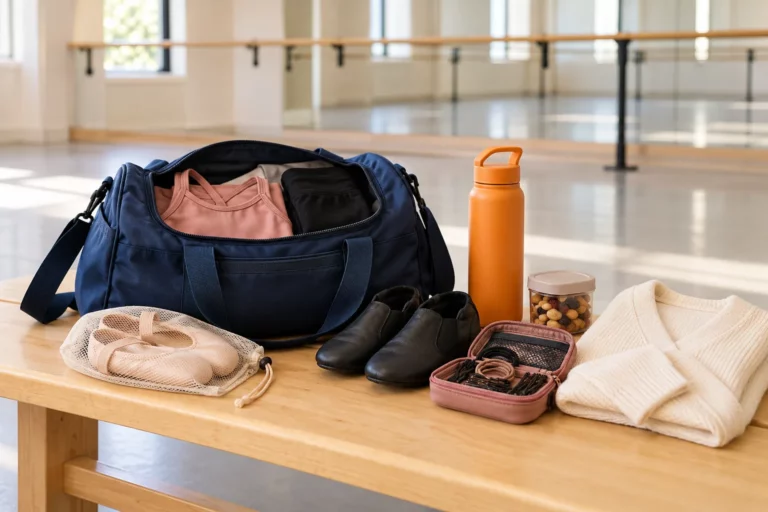
2. Correct shoes
Check style, colour and condition against the studio’s instructions.
Keep shoes separate from delicate costumes and label them discreetly where it won’t show onstage.
3. Required tights and a spare
Confirm the exact colour and style. If different routines require different tights, label the packages.
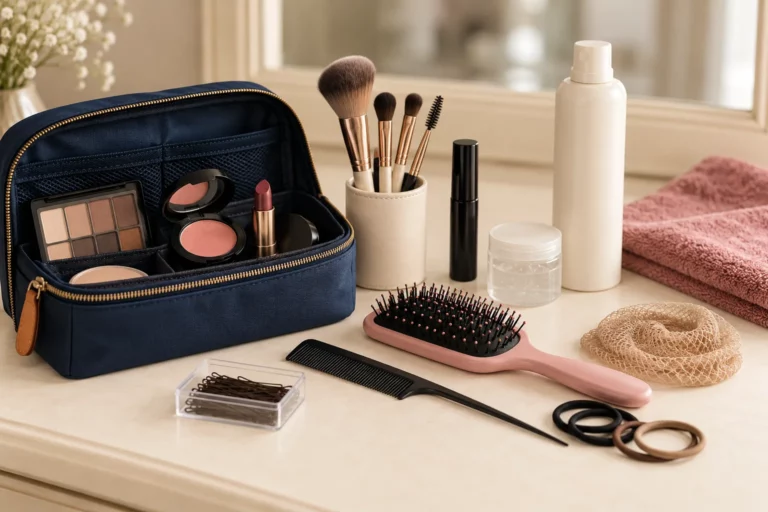
4. Hair supplies and required hairpieces
Bring the tools and products you practised with, plus spare pins and elastics.
If your dancer is arriving with hair finished, you’ll still want supplies for adjustments.
5. Required makeup and removal supplies
Pack the correct shades, clean tools and a familiar remover for the end of the day.
Keep the required lip colour accessible for touch-ups.
6. A labelled garment bag
A garment bag helps keep the costume and its smaller accessories together during travel.
Amazon option: Univivi clear dance garment bags. Check the length against your dancer’s costume before ordering.
A garment bag you already own may work perfectly well.
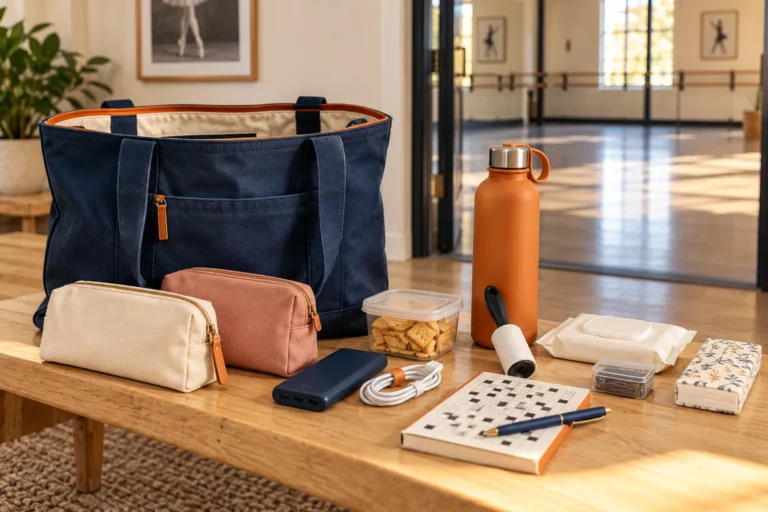
7. A small emergency kit
Pack spare hair supplies, secured safety pins, basic sewing supplies and tissues.
Keep it accessible so you don’t have to unpack everything to find one elastic.
8. Water
Bring a refillable bottle and check where you can refill it.
Label it clearly and keep it away from costumes and makeup.
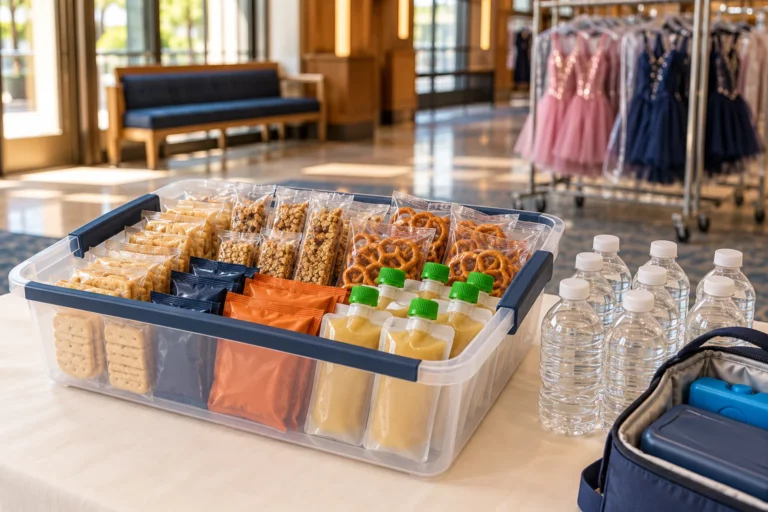
9. Familiar snacks and food
Pack food your dancer already likes, with quick snacks for short breaks and something more substantial if the schedule allows.
Check outside-food and allergy rules. Use appropriate cold storage for perishables.
10. Warm-up clothes and an easy-change outfit
Follow your studio’s clothing requirements.
A zip-front or button-front top is useful when changing around finished hair and makeup. Add comfortable clothes for the trip home.
11. Schedule, contact details and a charged phone
Save the venue address, studio contact information and meeting instructions.
Bring a charging cable or power bank if you expect a long day.
12. A small parent comfort kit
Pack your own water, food, comfortable layer and any personal essentials.
If the venue has suitable seating and allows it, a compact cushion may be useful.
Amazon option: Therm-a-Rest Z Seat folding foam pad, a portable sitting pad to consider for firm seats or bleachers. Check the price against simpler options and use what you already own where possible.
Do You Need a Rolling Dance Bag Right Away?
No.
For a small number of routines, ordinary luggage, a garment bag and a separate hair and makeup pouch may be enough.
A rack bag becomes worth considering when carrying everything or managing costume changes is becoming difficult.
Borrowing a suitable bag for your first event can also help you learn what size and layout you’d actually use.
What Should Your Dancer Wear to the Venue?
Follow your studio’s instructions.
If arriving in costume, use an appropriate cover-up and protect it from food, weather and rough surfaces.
If changing at the venue, put the first costume somewhere easy to reach.
Have footwear suitable for walking through parking lots and public areas, then change into performance shoes where instructed.
Keep the Changing Area Easy to Share
Changing rooms can become busy quickly. A little organization helps everyone.
- Use only the space allocated to your studio or dancer.
- Keep walkways clear.
- Put belongings back into the bag after each change.
- Keep food and drinks away from costumes.
- Follow rules about which adults may enter.
- Keep phones and cameras put away in changing areas.
- Ask before borrowing another dancer’s supplies.
Don’t assume every parent can go backstage or into the dressing room. Confirm access and supervision arrangements beforehand.
Help Your Dancer Know What Happens Next
A first competition brings new sounds, people and routines.
Give your dancer a simple explanation:
“We’ll find your teacher, get ready, and wait with your group. Your teacher will help you know when it’s time to dance.”
Try to give one next step at a time rather than narrating the entire schedule.
Before handing over supervision, make sure you and your dancer know:
- Which adult is responsible
- Where you will be
- Where and how you will meet afterward
If your child needs help with instructions, loud spaces or unfamiliar routines, discuss that with the teacher before the event.
What If Something Goes Wrong?
A missing accessory, unexpected delay or last-minute costume problem doesn’t need five adults solving it at once.
Tell the teacher, explain the issue clearly and follow their direction.
If your dancer forgets part of the routine or feels disappointed afterward, start with support:
- “I loved watching you.”
- “You did something new today.”
- “Do you want a hug, a snack or a quiet minute?”
Let the teacher handle technical feedback. You don’t need to conduct a performance review in the parking lot.
Be a Considerate Audience Member
Check the event’s audience rules before entering.
- Silence your phone.
- Follow staff instructions about when to enter or leave.
- Keep conversations quiet.
- Avoid blocking anyone’s view.
- Applaud respectfully for other dancers.
- Check photography and recording rules before using your camera.
Being allowed to take a lobby photo doesn’t necessarily mean recording performances is permitted.
Awards Can Be Confusing the First Time
Competitions and festivals use different scoring and recognition systems.
Depending on the event, you may hear about:
- Score-based awards
- Placements within a category
- Overall results
- Special awards
- Adjudicator feedback
An award label doesn’t have the same meaning at every event. Ask your studio to explain the system rather than comparing names across competitions.
Confirm whether your dancer needs to attend a particular awards session and what they should wear.
Plan for Waiting, Food and Small Costs
There may be a long gap between a short performance and the next scheduled activity.
Pack a quiet activity and ask your teacher before leaving the venue or taking your dancer away from the studio area.
Also check whether you need to budget for:
- Admission
- Parking
- Programs
- Meals
- Official photos or videos
- Optional merchandise
Not every event charges for each item. Knowing what applies helps you choose your extras ahead of time.
The Night Before Your First Competition
- Check for the latest studio updates.
- Confirm arrival time and meeting place.
- Check every complete costume.
- Pack shoes, tights and accessories.
- Prepare hair and makeup supplies.
- Set out the getting-ready outfit.
- Pack food and leave a reminder for refrigerated items.
- Charge your phone and power bank.
- Save the schedule and venue details.
- Allow time for parking and finding your group.
Aim for a morning with a little breathing room.
More Dance Parent Guides
- Dance Competition Packing List: The Checklist I Use
- Dance Competition Hair and Makeup Kit for Beginners
- Long Dance Competition Days: Snacks and Survival Tips for Parents
Find every dance guide in one place on our Dance Parent Hub.
First Dance Competition FAQs
Can parents go backstage?
Access varies by event and studio. Confirm which adults are authorized and who will help your dancer.
Do we stay for the whole competition?
Not necessarily. Ask your studio which performances, awards sessions and other commitments your dancer must attend.
Can my dancer eat in costume?
Use a suitable cover-up and keep food away from the costume. Choose a proper break where possible, following your studio’s plan.
Should we practise repeatedly while waiting?
Follow the teacher’s direction. Your dancer may need rest or a calm activity rather than repeated last-minute rehearsals.
Do I need to understand all the scoring?
No. Learn the basics from your studio, then focus on helping your dancer arrive prepared and feel supported.
Your First Competition Is a Learning Day Too
You’ll learn which snacks get eaten, how long hair takes and what your dancer needs between routines.
Start with clear instructions, complete costumes and a manageable packing system.
Your job is to help your dancer get where they need to be, with what they need—and be glad to see them when they come offstage.