Hockey Team Treasurer Tips: How to Track Dues, Bills and Fundraising
Somebody had to say yes at the parent meeting, and this season it was you. Congratulations, you’re the hockey team treasurer. Now you’re holding a bank card, a stack of e-transfer notifications and a growing pile of ice invoices.
I’m a senior accounting technician and a sports mom, so I’ve seen both sides of team money. The good news: being a hockey team treasurer isn’t hard. It just needs a simple system you set up in September and keep up with for ten minutes a week.
Heads up: near the end of this post I mention a tool I made and sell in my Etsy shop. Everything else here works with a notebook or a spreadsheet too.
What a Hockey Team Treasurer Actually Does
Every association runs things a little differently, so check with your team manager and your association first. In most teams, the treasurer:
- Collects team fees from each family and keeps track of who still owes
- Pays the bills: extra ice, tournament entries, referees, team apparel, year-end party
- Records fundraising and sponsor money
- Keeps receipts
- Gives parents regular updates on where the money is
Set It Up Right in September
Use a separate team account. Never mix team money with your own. If your association provides a team account, use it. Ask whether two signatures are needed for cheques or large payments. That protects you as much as the team.
Write a budget before you spend a dollar. List every line you expect: ice, tournaments, referees, apparel, team events, bank fees and a small “other” line. Then compare it to what’s coming in: your opening balance, team fees times the number of players, and any fundraising you’ve planned. If the budget is bigger than the money, find out now, not in February.
Agree on payment rules. Due dates, whether families can pay in instalments, and which methods you accept (e-transfer, cash, cheque). Put it in writing in the team chat so nobody is surprised later.
Tracking Player Dues Without the Awkward Chats
The hardest part of the job is usually chasing fees. A few habits make it much easier:
- Record every payment the day it arrives. Player, amount, date and method. E-transfer notifications get buried fast.
- Keep a simple paid / owes list. One line per player, with fee, paid and still owing.
- Send reminders privately. Never post who owes money in the team group chat. A quick private message is kinder and gets better results.
Keep Every Receipt
Snap a photo of every receipt and invoice the moment you get it, and save them in one folder on your phone. When a parent asks what the $950 tournament line was for, you can answer in ten seconds. It also makes handing the books to next year’s treasurer painless.
Send Parents a Monthly Statement
A short monthly update builds trust and stops questions before they start. Keep it to one page:
- Opening balance
- Money in (fees, fundraising, sponsors)
- Money out (ice, refs, tournaments and so on)
- Closing balance
- Total fees still outstanding (as a total, not by family name)
When you email it, put parent addresses in BCC so families don’t see each other’s emails.
Plan for Tournaments and Fundraising
Tournament entries are often the biggest surprise in a hockey budget, so ask your manager early which ones the team is entering. Record fundraising money in and fundraising costs out separately, so you can see what a bottle drive actually earned. If your team travels, the tournament hotel survival kit covers the packing side.
The Tool I Built for This
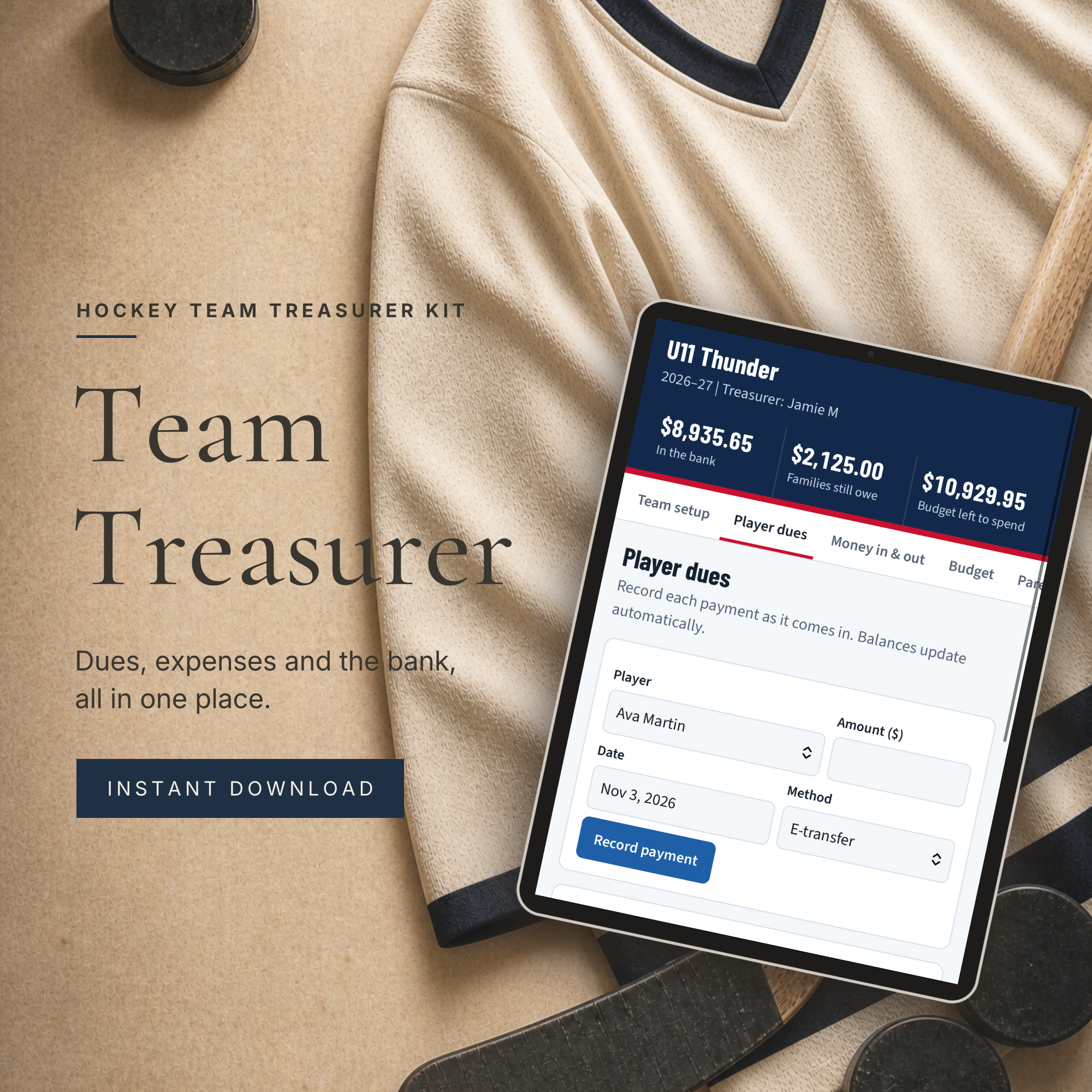
I got tired of seeing treasurers juggle spreadsheets, so I built the Hockey Team Treasurer Kit. It’s an interactive web tool that opens in your browser on your phone, tablet or computer. It tracks player dues (paid, owing or overpaid), money in and out, and your budget vs. what you’ve actually spent. It also makes the monthly parent statement for you, ready to print, copy or email. Your data stays on your own device.
It’s a one-time purchase in my Etsy shop, and it comes with a sample team so you can explore before you enter your own.
Quick Treasurer Checklist
- Separate team account set up
- Budget written and checked against fees
- Payment rules shared with families
- Every payment recorded the day it arrives
- Receipts photographed and saved in one folder
- Monthly statement sent to parents
Being treasurer is a thankless job some weeks, so if you’re the team mom or dad organizing an end-of-season thank you, here are some team gift ideas. New to all of this? Start with the first year hockey parent guide.