Dance Studio Practice Bag Must-Haves: What to Pack for Class
The everyday dance bag has a simple job: get the right shoes, clothing and small essentials to the studio—and bring them home again.
Somehow, it can still end up containing one jazz shoe, three empty snack wrappers and the hair elastic nobody could find before class.
A useful practice bag doesn’t need to be packed with extras. It needs a consistent setup that your dancer can understand and help maintain.
Here’s what to pack for dance class, what’s worth keeping as a backup and how to make the school-to-studio transition easier.
As an Amazon Associate, I earn from qualifying purchases. If you purchase through qualifying links, I may earn a commission at no extra cost to you.
Quick Dance Practice Bag Checklist
Start with your studio’s requirements, then pack:
- Correct shoes for that day’s classes
- Required dancewear
- Required tights or socks
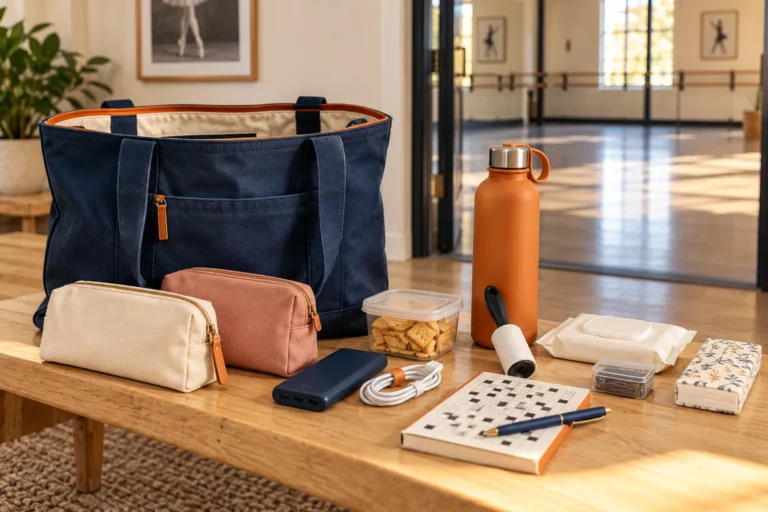
- Water bottle
- Small hair kit
- Approved warm-up layer
- Snack or meal for longer evenings, where permitted
- Spare essentials suited to your dancer
- Separate pouch for damp or used clothing
- Any teacher-requested equipment
Younger dancers may only need a few of these items. Pack for the actual class schedule.
1. Choose a Bag Your Dancer Can Manage
Before looking at colours or personalization, check whether your dancer can:
- Carry the packed bag comfortably
- Open and close the zippers
- Find their shoes
- Reach their water bottle
- Put everything away again
A backpack or small duffel may be plenty for regular classes.
Look for a practical opening, manageable empty weight and pockets that serve a purpose. Check the studio’s storage arrangements before choosing something bulky.
Compare small dance bags on Amazon →
Budget tip: Try an existing backpack first. You’ll quickly learn whether you need more space or simply fewer things inside.
2. Pack the Shoes for That Day
Check the class schedule and your teacher’s instructions.
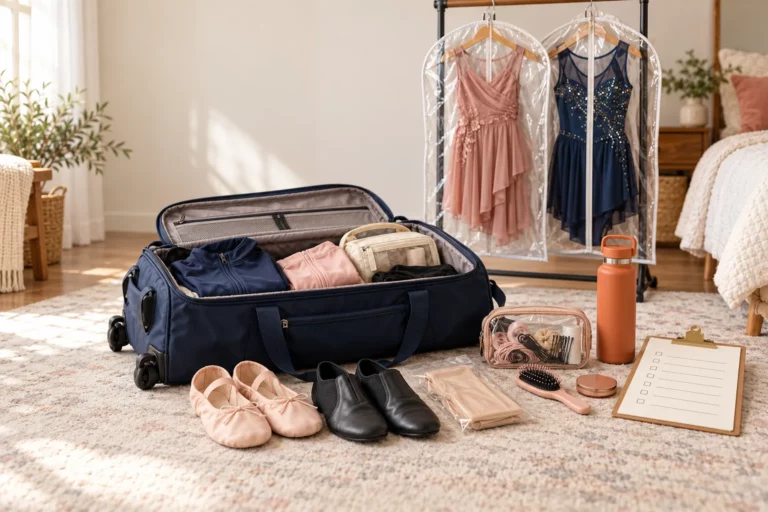
Depending on the day, your dancer might need ballet slippers, jazz shoes, tap shoes or another specified style. Don’t assume every class uses the same footwear.
Make a simple weekly list:
| Day | Classes | Shoes to pack |
|---|---|---|
| Monday | Your dancer’s classes | Required pairs |
| Tuesday | Your dancer’s classes | Required pairs |
| Wednesday | Your dancer’s classes | Required pairs |
| Thursday | Your dancer’s classes | Required pairs |
For some families, keeping all frequently used shoes in the bag is easier. For others, packing only that day’s pairs keeps the load manageable.
Either approach works if you check the actual shoes.
Keep Shoes Separate From Clean Clothing
Use a shoe compartment or separate pouches so dirty soles and rough fastenings stay away from dancewear.
Amazon option: Bloch mesh shoe bag. The manufacturer describes it as an open-mesh drawstring bag for pointe shoes. Check its dimensions if considering it for another type of dance shoe.
A ventilated pouch doesn’t replace taking damp shoes out to dry appropriately at home. Follow care instructions for each pair.
Label shoes discreetly where identification won’t affect their use or show during performances.
3. Keep Required Dancewear Together
Follow the studio’s dress code for each class.
Your dancer may need:
- Leotard or approved top
- Shorts, leggings or other required bottoms
- Tights
- Specific socks
- Approved layers
If they change after school, pack the complete outfit together in a pouch or packing cube.
Compare small packing cubes on Amazon →
You don’t need a special organizer. A clean zippered bag can keep the outfit together.
Packing tip: Include underwear if a change is needed. Remembering the leotard is helpful; remembering the whole outfit is better.
4. Add a Small Everyday Hair Kit
A practice hair kit can be much smaller than a competition kit.
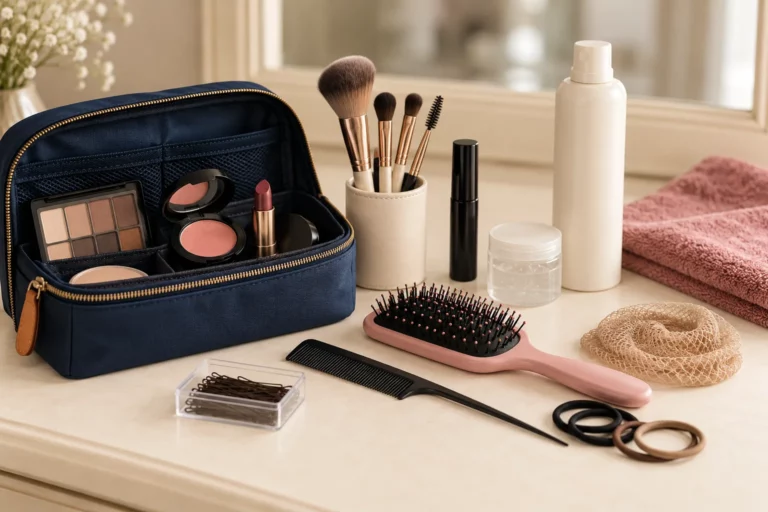
Pack what your dancer needs for the required class hairstyle:
- A few reliable elastics
- Bobby pins
- Hairpins, if used
- Hairnet, if required
- Small brush or comb
Amazon options:
Choose colours and tools that suit your dancer. Keep pins secured in a small container.
If hair should be finished before class, aim to do that before arriving rather than relying on a rushed lobby fix.
5. Bring a Water Bottle That’s Easy to Use
Choose a bottle your dancer can open, close and carry independently.
Useful features include:
- A secure lid
- A size that fits the bag
- Parts you can clean properly
- Clear identification
Compare Sistema water bottles on Amazon →
Use a bottle you already own if it works. Check for leaks at home before placing it beside clothing or paperwork.
Empty, wash and dry it regularly according to its care instructions.
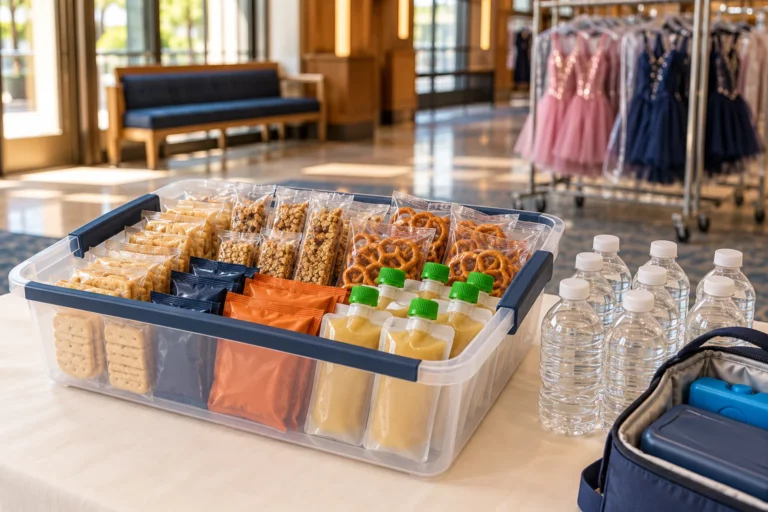
6. Plan Food for Longer Evenings
A short class and an evening of back-to-back classes need different plans.
Check the studio’s food rules, permitted eating areas and allergy guidance. Pack familiar food your dancer can eat during an actual break.
Options might include:
- A banana
- Crackers
- A familiar oat bar
- A sandwich or wrap
- A packed meal for a longer evening
Amazon option: Sistema Mini Bites snack containers. These are small 130 mL pots, so use a larger container for a meal.
Keep perishable foods properly chilled in an insulated bag with ice packs. A snack pouch inside the dance bag doesn’t provide refrigeration.
For evenings with several classes, confirm when your dancer can eat rather than assuming there will be a long break.
7. Pack an Approved Warm-Up Layer
Follow your studio’s guidance about clothing worn during class.
A comfortable layer can be useful for travel and waiting between sessions. A zip-front top is also easy to remove without pulling it over finished hair.
Compare kids’ zip-front hoodies on Amazon →
It doesn’t need a dance slogan. A suitable layer your child already owns may do the job.
In cold weather, keep proper outdoor clothing and boots part of the plan. A studio jacket alone isn’t a winter travel outfit.
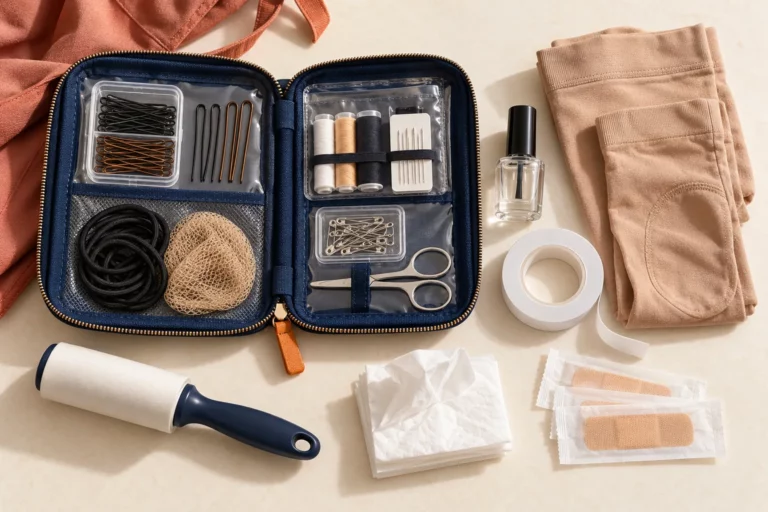
8. Choose a Few Sensible Backups
You don’t need to duplicate the entire dance wardrobe.
Consider what would be difficult to manage if it were forgotten or damaged:
- Spare tights, if required
- Required socks
- Spare underwear
- A clean basic top
- Extra hair elastics
Keep backups in a clearly identified pouch and replace them after use.
Check sizes occasionally. An emergency outfit your child outgrew last season is mostly an optimistic souvenir.
9. Separate Damp or Used Clothing
A small washable pouch or wet bag can help keep used clothing away from clean items during the trip home.
Compare small wet bags on Amazon →
Empty the pouch promptly afterward and clean it according to its instructions. Don’t leave damp clothing sealed in the dance bag between classes.
Keep shoes stored according to their own care requirements rather than automatically putting everything damp into one closed bag.
10. Add Training Tools Only When Requested
Foam rollers, resistance bands and other equipment sometimes appear on dance packing lists, but they aren’t automatic requirements for every child.
Ask the teacher:
- Is the item needed for class?
- What size or type is appropriate?
- Will the studio provide it?
- How should the dancer use it?
Product to compare only if requested: TriggerPoint GRID foam roller. Check the selected model and size; it may be more equipment than your dancer needs.
Don’t buy a roller or stretching device simply because it appears in a “must-have” list. Keep equipment use within the guidance of your dancer’s teacher or qualified healthcare professional.
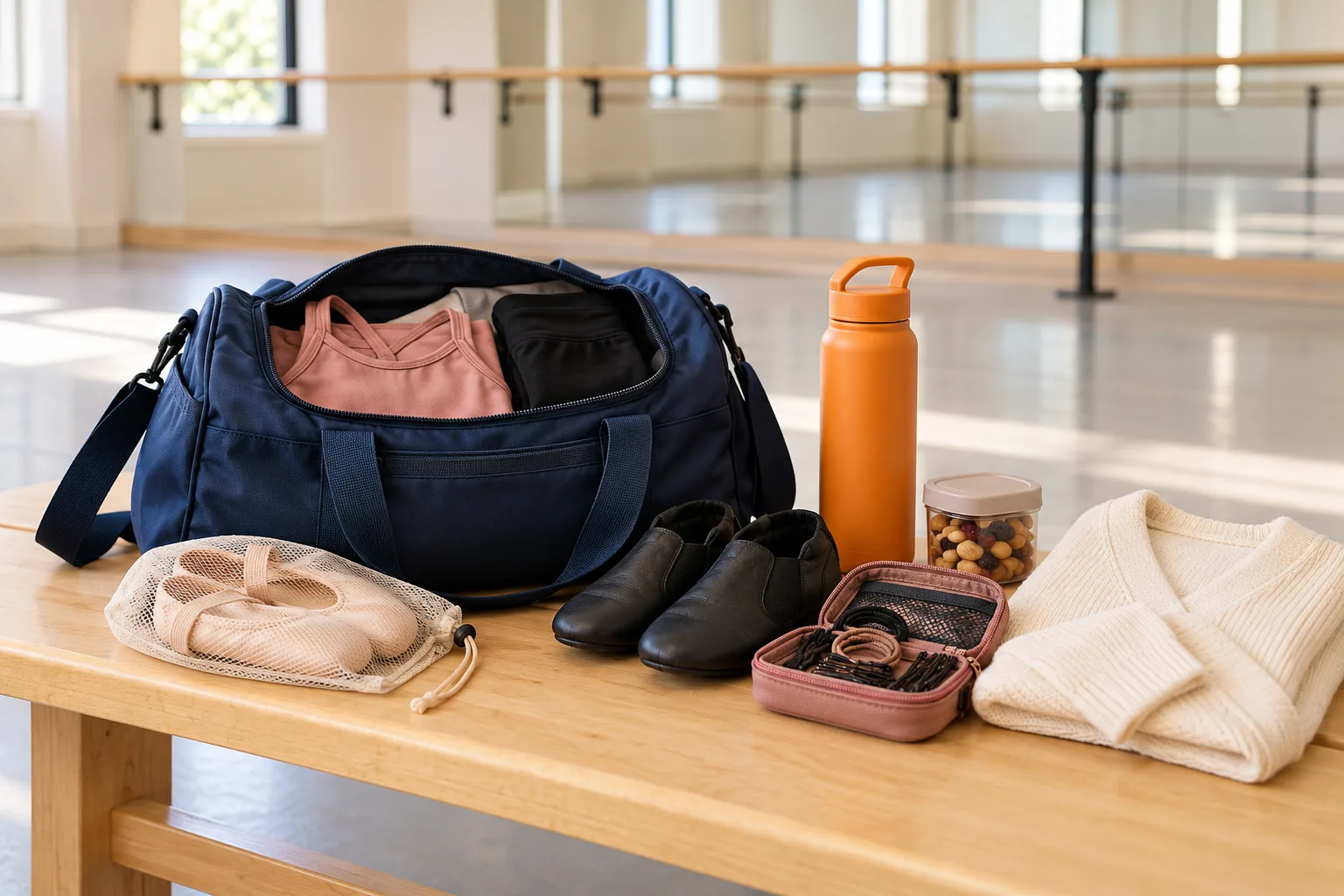
A Simple Way to Organize the Bag
Give each category one consistent place.
| Bag area | What goes there |
|---|---|
| Main compartment | Dancewear and warm-up layer |
| Shoe section or pouches | Required footwear |
| Small zipped pocket | Hair kit |
| Bottle pocket | Water |
| Separate lunch bag | Food that needs cold storage |
| Spare-clothes pouch | Backup essentials |
| Used-clothing pouch | Items going straight to the laundry |
Show your dancer the setup. They’re more likely to use it if they know where everything belongs.
For younger children, a picture checklist can be easier than a written list.
Make the School-to-Studio Change Easier
Pack the night before when possible.
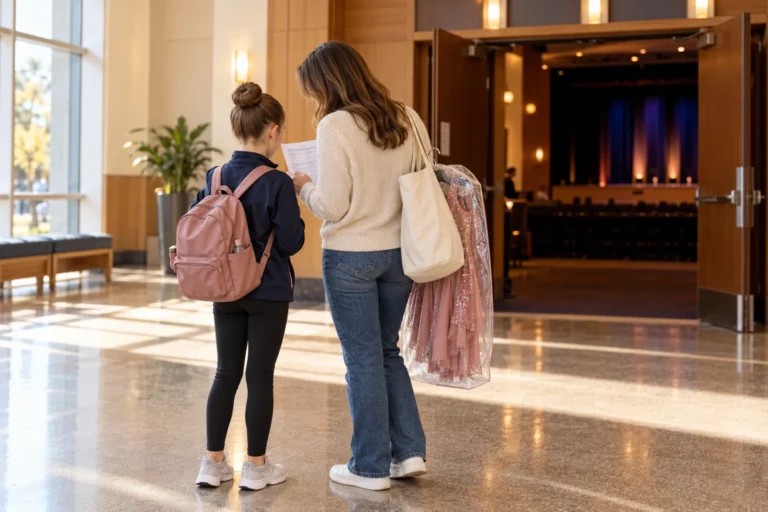
Keep the complete dance outfit together, with shoes and hair supplies easy to reach. If an adult is bringing the bag later, agree on who is responsible so it doesn’t stay by the front door.
For a busy evening, check:
- Where will your dancer change?
- Who is bringing the bag?
- When will they eat?
- Does hair need to be done before pickup?
- Who is collecting them afterward?
A clear handoff helps more than adding another pocket to the bag.
Let Your Dancer Help With the Check
Build independence a little at a time.
A younger dancer might check for:
- Shoes
- Water
- Dance clothes
- Hair pouch
An older dancer can compare the contents with that day’s schedule and flag missing or outgrown items.
Keep the routine short enough to repeat consistently. You can still do a final adult check when needed.
The Two-Minute After-Class Reset
Before the bag goes away:
- Remove food and rubbish.
- Take out damp clothing and shoes that need airing.
- Empty the water bottle.
- Replace used backups.
- Check that both shoes returned home.
Once items are clean and dry, repack what can stay ready.
A weekly deeper check can catch loose shoe fastenings, empty hair supplies and clothing that no longer fits.
What Can Stay Out of the Practice Bag?
Unless your studio requests them, you probably don’t need:
- Competition costumes
- A full stage makeup kit
- A large costume repair organizer
- Every pair of shoes your dancer owns
- Unapproved training equipment
- Valuable jewellery
- Several full-size styling products
Keep the competition setup packed separately so everyday classes don’t gradually empty it.
Buying a New Practice Bag? Check These Details
Before ordering, compare:
- Full dimensions
- Empty weight
- Strap fit and adjustability
- Shoe compartment size
- Bottle storage
- Cleaning instructions
- Return terms
Compare BAGSMART gym and dance-sized bags on Amazon →
Some gym bags are sized for adults and may be too large for a young dancer. Check measurements against a bag your child can already carry comfortably.
Prices and package options change, so compare the full purchase cost before buying.
More Dance Parent Guides
- Dance Competition Packing List: The Checklist I Use
- Dance Mom Bag Essentials: What to Buy With a $25-Per-Item Budget
- Dance Competition Emergency Kit: What Every Dance Mom Needs
Find every dance guide in one place on our Dance Parent Hub.
Dance Practice Bag FAQs
Does every dancer need a duffel?
No. A suitable backpack can work well, especially for fewer classes or younger dancers.
Should shoes stay in the bag all week?
Check and care for them after use. Let damp shoes dry appropriately, then return them to their assigned place once ready.
Do we need makeup for regular class?
Only if your studio specifically requests it for an activity such as a rehearsal or photo session. Don’t assume the competition makeup kit belongs in the everyday bag.
Should I buy a foam roller?
Ask the teacher first. It may be unnecessary, provided by the studio or unsuitable for your dancer’s current needs.
How do we stop losing things?
Label belongings discreetly, give them consistent places and check the bag before leaving the studio. A short routine is easier to maintain than a complicated system.
Keep the Everyday Setup Easy to Repeat
Pack the correct shoes, required clothes, water and a small hair kit. Add food and backups to suit the length of the evening.
Give everything a home and reset the bag after class.
The best practice bag is one your dancer can manage—and one that brings both shoes home.