Chlorine Hair and Skin Care for Young Swimmers
Practice is over, your swimmer climbs out happy, and then the real workout starts: hair that feels like straw, a faint pool smell in the car and a comb-out that takes longer than the cool-down. Getting out of the pool should not require a second training session with a detangling brush.
Here’s the short answer. Shower before swimming, as most pools ask. Rinse hair and skin with fresh water as soon as practice ends. Cleanse as needed, condition, and detangle gently. Then pat skin dry and moisturize if it feels dry. That simple routine handles most chlorine hair frustrations without a cupboard full of new products.
This guide is based on dermatology resources and manufacturer information, not hands-on product testing. Product details were checked on October 11, 2026. Formulas and labels change, so read the current label before you buy.
This post contains affiliate links. If you purchase through these links, I may earn a commission at no extra cost to you. As an Amazon Associate I earn from qualifying purchases.
What Pool Exposure Can Mean for Hair and Skin
Pools are treated with disinfectants such as chlorine to keep the water safe for swimming. With regular practices, some kids end up with hair that feels dry, rough or tangly, and skin that feels tight or dry. The American Academy of Dermatology (AAD) recommends washing pool chemicals out of children’s hair after swimming, because chemicals left in the hair can damage it.
Not every swimmer notices this. A child with short, fine hair may need little more than a rinse and their usual shampoo, while long, thick or curly hair often needs more conditioner and patience.
That pool smell that follows kids into the car usually hangs around because pool water is still sitting on hair, skin and gear. Rinsing well and drying out wet things helps.
One important line: dry, tangly hair and skin that feels a bit tight are cosmetic concerns. Ongoing redness, itching, pain, a rash or broken skin is different. If you see those, check with your child’s doctor or pharmacist instead of trying more products.
Before Swimming
Shower first. Most pools require it anyway. The U.S. Centers for Disease Control and Prevention (CDC) recommends showering for at least one minute before getting in, to rinse off dirt and sweat so more chlorine is free to do its job of killing germs.
Get hair wet with clean water. A dermatologist quoted by Cleveland Clinic explains that hair already saturated with clean water can absorb less chlorinated water. Conveniently, the pre-swim shower takes care of this.
Put on a cap if your child wears one. Tucking long hair into a low bun or braid first usually makes the cap easier to put on and more comfortable.
What about conditioner before swimming? Some dermatology sources mention a leave-in conditioner before swimming, and some swim products say they can be used that way. Pools may have their own rules about products on hair and skin, though. Check with your facility and the product label first. If you’re unsure, skip it and save the conditioner for after practice.
After Swimming: A Simple Hair Routine
- Rinse right away. Use the pool shower to rinse hair thoroughly with fresh water. The AAD suggests rinsing hair right after swimming.
- Cleanse as needed. Shampoo helps wash out pool water and residue. The AAD suggests concentrating shampoo on the scalp rather than the full length of hair.
- Condition. The AAD suggests conditioner on the ends for fine or straight hair and through the full length for dry or curly hair.
- Detangle gently. Use a wide-tooth comb and start at the ends, working up. The AAD notes that hair is delicate when wet and recommends a wide-tooth comb rather than a brush.
- Blot, don’t rub. Wrap or squeeze hair with a towel instead of scrubbing it dry.
How often should your swimmer shampoo? There isn’t one schedule that fits everyone. It depends on how often they swim, their hair type, their scalp and the directions on the product. Some families shampoo after every practice. Others rinse and condition on some days and shampoo on others.
Swimmer Shampoo vs. Regular Shampoo
Swimmer shampoos are made to wash out pool residue. Malibu C, for example, says its Swimmers Wellness Shampoo “helps remove pool elements, including chlorine and copper.” SoCozy says its Swim 3-in-1 uses activated charcoal to clarify hair and remove chlorine and salt. These are manufacturer claims. I did not find independent testing of these specific products.
Two terms come up a lot. Clarifying shampoos are designed to remove buildup. Chelating ingredients, such as EDTA, bind to metals like copper, and medical literature lists shampoos containing chelating agents as one way to deal with green-tinted hair. Not every swim shampoo contains a chelating agent, so check the ingredient list if that matters to you.
Stronger or more frequent cleansing is not automatically better. A dermatologist quoted by Cleveland Clinic cautions that clarifying shampoo shouldn’t be used every day because it can be drying. Directions vary by product, and some swim shampoos are labelled for daily use, so weigh the label against how your child’s hair actually feels.
When your regular shampoo is enough: if a thorough rinse plus your usual gentle shampoo and conditioner leaves hair clean and manageable, you don’t need to switch. A swim shampoo may be worth trying if hair still feels coated, smells like the pool after washing or looks discoloured.
Leave-In Conditioner and Detangling
A leave-in conditioner or detangling spray can turn a tearful comb-out into a quick one. Use it on damp hair after swimming, following the label, and start small. Too much can leave hair heavy.
- Fine or straight hair: a light mist on the ends is usually plenty. The AAD suggests letting straight hair dry a little before combing.
- Thick or long hair: split hair into sections and work through one at a time, from the ends up.
- Curly or tightly textured hair: the AAD recommends combing while hair is damp with a wide-tooth comb. Detangling while conditioner is still in can help, and many curly-haired swimmers need more conditioner than their straight-haired teammates.
If your child already has a detangler that works, keep using it. A swim-specific spray is optional, not essential.
A Simple After-Swim Skin-Care Routine
- Rinse off in a warm, not hot, shower.
- Use a gentle cleanser where needed. For dry skin, the AAD suggests a gentle, fragrance-free cleanser used only where it’s needed. On some days, a good rinse may be enough.
- Pat dry instead of rubbing.
- Moisturize within a few minutes while skin is still slightly damp. The AAD notes that creams and ointments tend to be more moisturizing than lotions.
Body wash cleans. It isn’t a moisturizer. If skin feels dry after practice, a plain moisturizer your child already uses without trouble is usually the simplest option.
If skin stays red, itchy, sore or cracked, stop adding products and check with a doctor or pharmacist.
What Swim Caps Can and Can’t Do
A swim cap keeps hair out of the face, helps manage long hair and reduces how much pool water reaches it. What it won’t reliably do is keep hair completely dry. Water tends to sneak in around the edges, especially on kids who are diving, flipping and generally being kids.
- Material: silicone caps are thicker, stretchy and often more comfortable for kids. Speedo describes its junior silicone caps as latex-free. Fabric caps are comfortable but aren’t designed to keep water out.
- Fit: look for a junior or kids’ size. It should be snug but not leave red marks or cause headaches.
- Long or thick hair: long-hair caps have extra room at the back for a bun or braid. Many are sold in adult sizes, so check the fit on younger swimmers.
- Removal: wet your fingers, slide them under the front edge and peel the cap back slowly. Yanking it off is how hair gets pulled.
- Care: rinse the cap in fresh water after practice and let it dry fully before it goes back in the bag. Check the label for any specific care instructions.
Product Comparison
These are researched options, not tested picks. All were listed on Amazon when checked on October 11, 2026. Chlorine-removal claims below are the manufacturers’ own. Check the current label before buying.
On a phone? Swipe sideways to see the whole table.
| Product | Intended purpose | Who may find it useful | Directions or age guidance | Main limitation |
|---|---|---|---|---|
| SoCozy Kids Swim 3-in-1 (311 mL) | Shampoo, conditioner and body wash for swimmers | Families who want one bottle in the swim bag | Lather head to toe. Marketed for kids; no age range stated | Contains fragrance; 3-in-1 may not condition enough for thick or curly hair |
| Malibu C Swimmers Wellness Shampoo (several sizes) | Swimmer shampoo | Frequent swimmers whose hair still feels coated after washing | Brand says daily or as often as desired; no age guidance on brand page | Not specifically made for kids; contains fragrance |
| SoCozy Kids Swim Leave-In Treatment Spray (237 mL) | Leave-in conditioner and detangler | Swimmers with long or tangle-prone hair | Use after shampoo; brand says it can also be used before swimming | Contains fragrance; no age range stated |
| Johnson’s No More Tangles Detangling Spray (295 mL) | Everyday detangler | Families on a budget or who already own it | For wet or dry hair; made for toddlers’ and kids’ hair, no age range | Not swim-specific; contains fragrance |
| Aveeno Kids Sensitive Skin Face & Body Wash (532 mL) | Gentle body and face wash | Kids who need more than a rinse after practice | Lather on wet hands or cloth, rinse well; made for children, no age range | Lightly scented, not fragrance-free |
| Speedo Junior Silicone Cap (latex-free silicone) | Swim cap for smaller swimmers | Kids with short to medium hair | One size, made for younger swimmers; no age range stated | Snug fit; may be tight over a big bun |
| Speedo Silicone Long Hair Swim Cap (latex-free silicone) | Swim cap with extra room for long hair | Older kids and teens with long or thick hair | Sold as an adult one-size cap; no age range stated | May be loose on younger swimmers; won’t keep hair completely dry |
Where to Find These Products
- SoCozy Kids Swim 3-in-1 Shampoo, Conditioner & Body Wash: SoCozy says it uses activated charcoal to remove chlorine and salt. A separate conditioner may still help thick or curly hair. Check the current price on Amazon
- Malibu C Swimmers Wellness Shampoo: the brand says it helps remove chlorine and copper. It isn’t made specifically for kids, and the brand page gives no age guidance. Check the current price on Amazon
- SoCozy Kids Swim Leave-In Treatment Spray: a scented leave-in and detangler. Check pool rules before any pre-swim use. Check the current price on Amazon
- Johnson’s No More Tangles Detangling Spray: a budget everyday detangler with no chlorine claims. If you already own it, it may be all you need. Check the current price on Amazon
- Aveeno Kids Sensitive Skin Face & Body Wash: tear-free and lightly scented. “Hypoallergenic” doesn’t guarantee it suits every child. Check the current price on Amazon
- Speedo Junior Silicone Swim Cap: one size for smaller swimmers. It may feel tight over a big bun. Check the current price on Amazon
- Speedo Silicone Long Hair Swim Cap: an adult one-size cap with extra room for a tucked-in braid or bun. It may be loose on younger swimmers, so it suits older kids and teens best. No specific hair capacity is stated. Check the current price on Amazon
A Minimal After-Swim Kit
Start with what you already have. Most families need only a few basics.
Basics
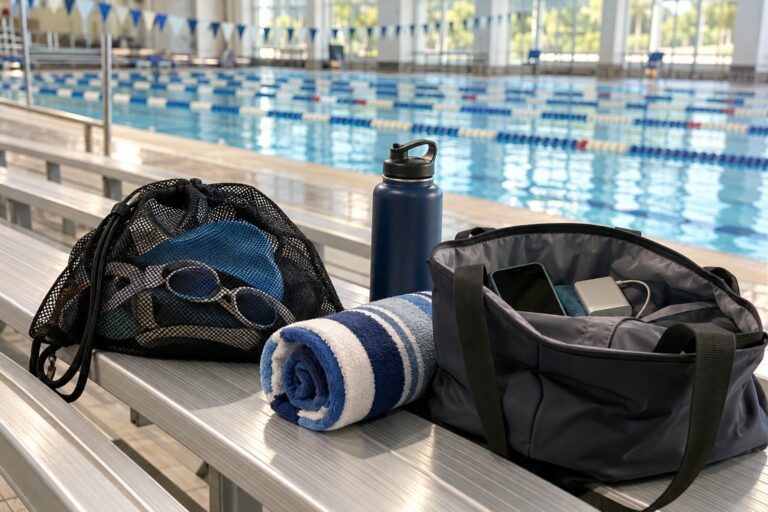
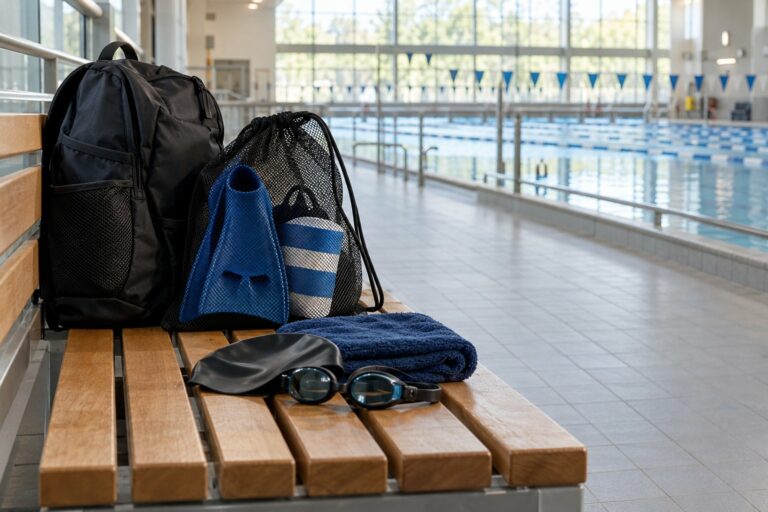
- Towel (a second one for hair is a bonus)
- Swim cap, if your child wears one
- Wide-tooth comb
- Travel-size shampoo and conditioner your child already uses
- Small moisturizer your child already uses without trouble
- Wet bag or plastic bag for wet suits and towels
Optional extras
- Swim shampoo for days when hair still feels coated
- Leave-in conditioner or detangling spray
- Spare cap and hair elastics
- Microfibre hair towel
For meet days, add these to our swim meet packing list.
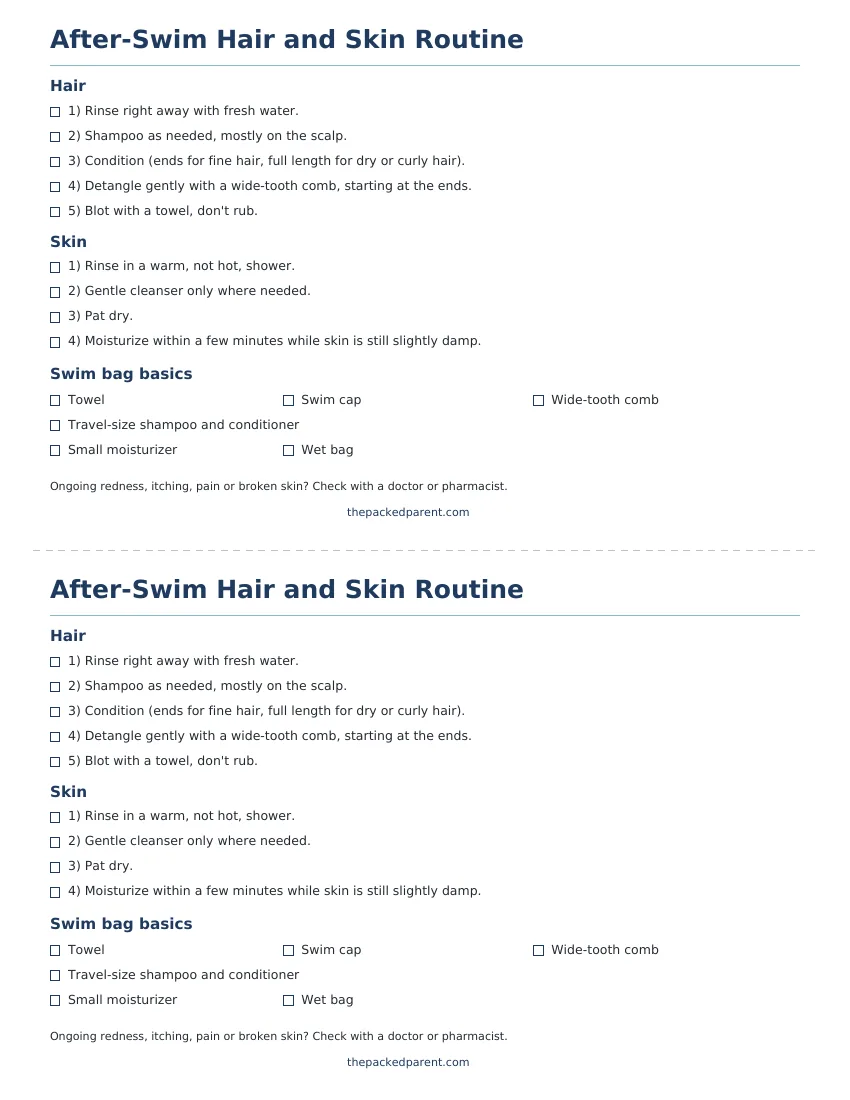
Want a reminder in the swim bag? Print the free after-swim hair and skin routine cards. There are two cards per page, so cut one for the bag and keep one at home.
Common Mistakes
- Aggressive detangling. Ripping a brush through wet hair is hard on hair and harder on morale. Use a wide-tooth comb and start at the ends.
- Leaving wet gear zipped in the bag. Wet towels, suits and caps left packed are a big source of that lingering pool smell. Unpack and hang everything to dry when you get home.
- Assuming a cap keeps hair dry. It reduces exposure. It doesn’t seal it out.
- Using stronger cleansing too often. More clarifying is not more clean. It can leave hair drier.
- Shopping by label buzzwords. “Natural,” “clean,” “hypoallergenic” and “dermatologist tested” don’t guarantee a product will suit your child. Read the directions and ingredients, and go by how your child’s hair and skin respond.
A swim bag that lets wet gear breathe makes unpacking easier.
FAQ
How often should a young swimmer shampoo?
There’s no single answer. It depends on how often they swim, hair type, scalp and product directions. Rinsing after every swim is a good habit. Shampoo as often as needed to keep hair and scalp clean and comfortable.
Is swim shampoo better than regular shampoo?
Not automatically. Swim shampoos are made to target pool residue, but a gentle regular shampoo and conditioner may be enough. Consider a swim shampoo if hair still feels coated or smells like the pool after washing.
Why does hair turn green after swimming?
It’s mainly copper, not chlorine on its own. Copper can come from pool water or plumbing, and it binds to hair more easily when hair is already damaged. It shows up most on light or blond hair. Shampoos with chelating agents such as EDTA are one option discussed in medical literature. If green tint keeps coming back, mention it to your pool staff too.
Do swim caps keep hair dry?
No, not reliably. A good-fitting cap reduces how much water reaches the hair and helps keep long hair under control, but some water usually gets in.
Does every swimmer need special products?
No. Many kids do fine with a rinse, their usual shampoo and conditioner, gentle detangling and a moisturizer when skin feels dry. Specialized products are optional extras.
The Bottom Line
The routine that works is the one you can repeat on a busy weeknight: shower, swim, rinse, cleanse as needed, condition, comb gently and moisturize if skin feels dry. Stick with it for a few weeks before buying anything new. Then add a swim shampoo or leave-in spray only if you still need it.
Sources
- American Academy of Dermatology – Teaching your child healthy hair care habits
- American Academy of Dermatology – Tips for healthy hair
- American Academy of Dermatology – Must-try summer hair care
- American Academy of Dermatology – 10 hair care habits that can damage your hair
- American Academy of Dermatology – Dermatologists’ top tips for relieving dry skin
- CDC – Guidelines for keeping your pool safe and healthy
- Cleveland Clinic – How to protect your hair from chlorine
- Cutis (1995) – Green hair, PubMed abstract
- SoCozy – Swim collection
- Malibu C – Swimmers Wellness Shampoo
- Johnson’s – No More Tangles Detangling Spray
- Speedo – Junior Solid Silicone Cap
- Speedo – Adult Silicone Long Hair Cap